
Building Bridges, Breaking Barriers: The Diplomacy of Peace – A UN Day Message from Nigeria’s Peace Representative Mojima Etokudo.
By Mojima Etokudo, PAd, Nigeria Peace Representative, May Peace Prevail on Earth International affiliated with the Department of Public Information of the United Nations Occasion: United Nations Day, October 24, 2026
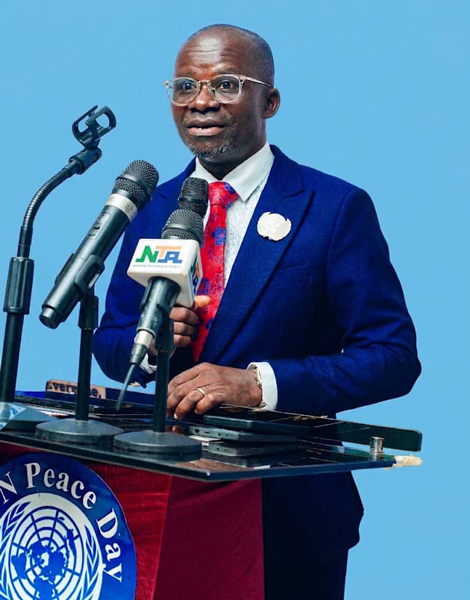
Distinguished Guests, Excellencies, colleagues, members of civil society, and my fellow advocates for peace, Ambassadors of Peace and Justice of Peace. Greetings from Nigeria. May Peace Prevail on Earth.
Today, as we gather physically or virtually to commemorate United Nations Day, we do so on a date that carries immense historical weight: October 24th. It was on this day in 1945 that the UN Charter entered into force, born from the ashes of a devastating global conflict, with a singular, resolute promise: to save succeeding generations from the scourge of war.
As the Secretary-General of the United Nations, António Guterres, recently reminded us: “The United Nations is an essential part of the fabric of our world. And it’s needed more than ever.”
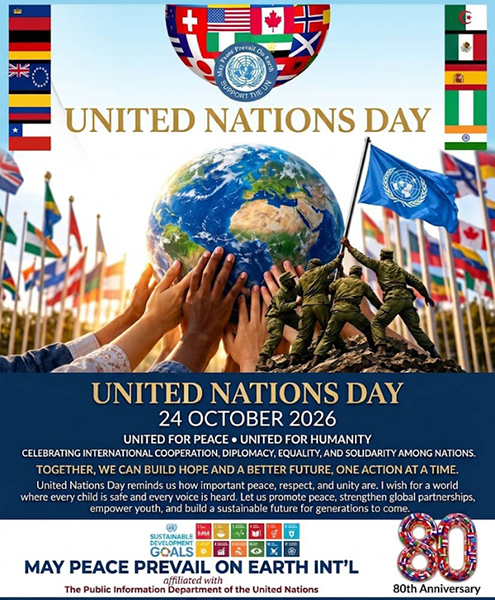
Today, I am deeply honored to speak with you about the most critical tool we have to hold that fabric of our world together: Conflict Management, grounded in the timeless UN ideals of Peace, Dialogue, and Diplomacy.
THE NECESSITY OF THE UN AND THE SHIFT TO CONFLICT MANAGEMENT
Why is the UN needed more than ever? Because our world is deeply fractured. We face rising geopolitical tensions, the devastating impacts of climate change, resource-driven conflicts, and deep social inequalities.
Conflict, in itself, is a natural part of the human condition. It arises from differences in interests, values, and perspectives. However, the true measure of a civilization is not the absence of conflict, but how it manages and resolves it.
In the past, the international community often reacted to conflict only after the bullets were fired. But true Conflict Management requires a paradigm shift. It requires us to move from a culture of reaction to a culture of prevention. It requires us to look at the imagery of the peacekeepers raising the UN flag a symbol of necessary intervention and pair it with the Sustainable Development Goals. Because we cannot manage conflict sustainably in a world plagued by extreme poverty, hunger, and inequality.
The UN remains the premier forum where the world’s nations can come together to manage these shared crises. It is the only institution with the universal legitimacy to convene the world, set norms, and hold the fabric of our global society together.
DIALOGUE AND DIPLOMACY – THE ENGINES OF PEACE
How do we manage conflict? The answer lies in the ideals we celebrate today: Dialogue and Diplomacy. This is the very essence of our work. Diplomacy is not a sign of weakness; it is the ultimate display of strength. It is the courage to sit across the table from an adversary and say, “Let us talk.”
Dialogue is the vehicle of diplomacy. Through dialogue, we transform the language of confrontation into the language of cooperation. We move from “us versus them” to a shared “we.”. Conflict management is not about imposing a victor’s peace; it is about finding a sustainable, inclusive resolution. It is about ensuring that every voice is heard, whether that voice belongs to a superpower at the Security Council or a marginalized community in the Global South.
When we choose dialogue, we choose to build bridges. When we choose diplomacy, we break the barriers of suspicion, hatred, and fear.
THE HUMAN ELEMENT AND THE LOCAL CONNECTION
While the UN operates on a global stage, the impact of conflict management is profoundly local. United Nations Day reminds us how important peace, respect and unity are. I wish for a world where every child is safe and every voice is heard. Together, we can build hope and a better future, one action at a time.”
This is the human face of conflict management. It is not just about treaties and resolutions; it is about the safety of a child in a war zone. It is about the mother who no longer has to fear the sound of gunfire. It is about the youth who has a future to look forward to, rather than a past to flee from.
Organizations like May Peace Prevail on Earth International, understand that peace is a grassroots endeavor. As a Nigeria Peace Representative, I have seen firsthand how local dialogues, community mediation, and interfaith harmony can stop conflicts before they escalate.
When we empower youth and strengthen global partnerships, as highlighted in the 80th-anniversary imagery, we are engaging in proactive conflict management. We are planting the seeds of a sustainable future.
A CALL TO ACTION
As we reflect on this UN Day, we must ask ourselves: What is our role in this global fabric? The United Nations is not just an organization housed in New York; it is a collective ideal. It lives in the hearts of those who believe in the power of dialogue over discord, and diplomacy over destruction. Support the UN – May Peace Prevail on Earth.
I call upon our leaders, our diplomats, and most importantly, our citizens, to support the UN’s mandate for peace. Let us be diplomats in our own communities. Let us be mediators in our families. Let us choose the path of dialogue when we face disagreements.
Let us remember the words of the Secretary-General: the UN is essential to the fabric of our world. But that fabric is woven thread by thread, by each of us.
CONCLUSION:
In conclusion, the management of conflict is the highest calling of our time. It demands patience, resilience, and an unwavering commitment to the ideals of Peace, Dialogue, and Diplomacy.
Let us pledge and resolve to do our part one action at a time to keep our planet safe, to ensure that every voice is heard, and to leave a legacy of peace for generations to come.
Together, we can build bridges. Together, we can break barriers. Thank you, and May Peace Prevail On Earth!